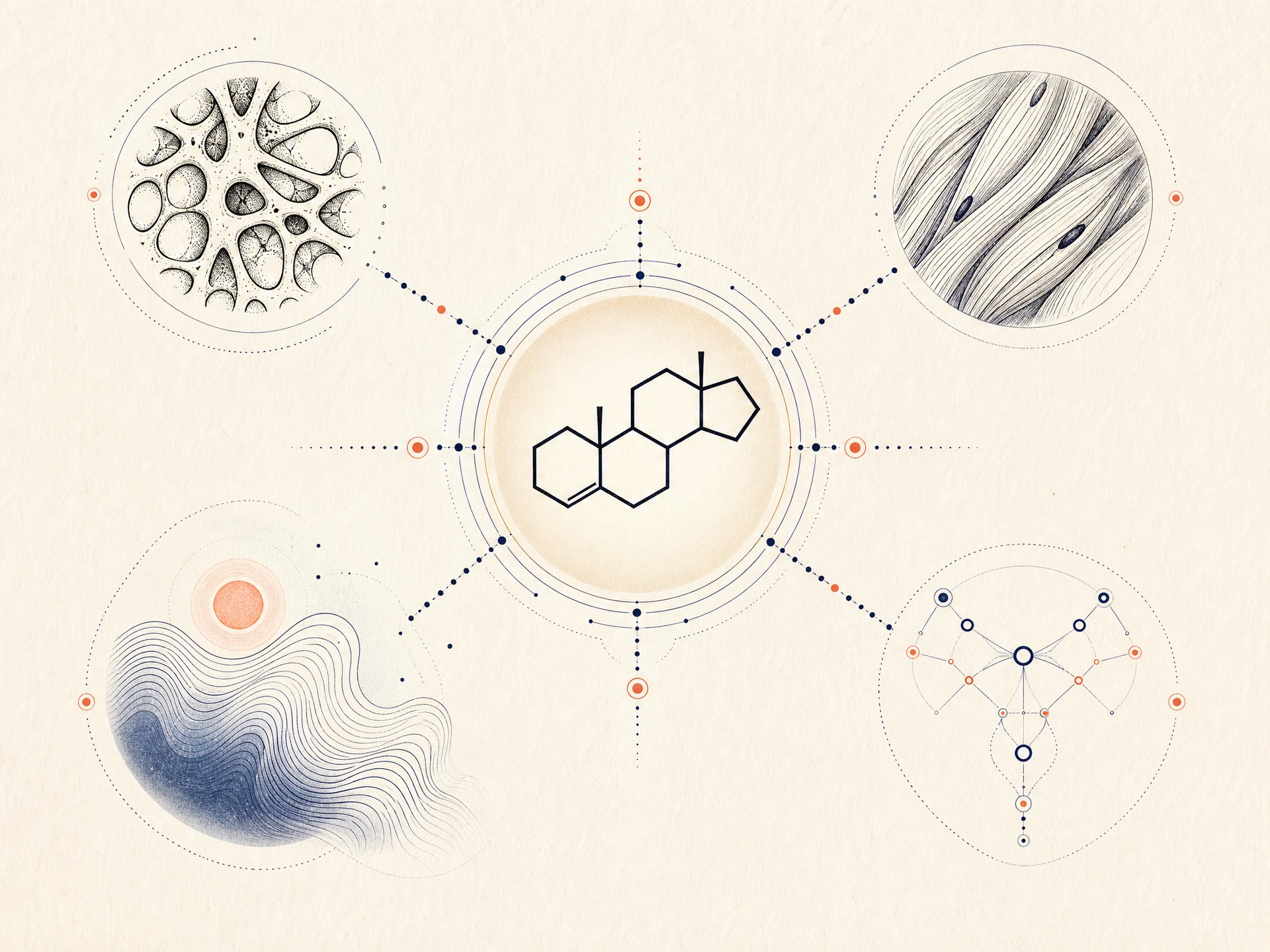
Testosterone and its metabolite dihydrotestosterone (DHT) are both androgens. Their effects — on hair follicles, prostate, skin, and other tissues — depend on receptor activity and tissue-specific biology, not a simplistic good-versus-bad label.
Key facts
- DHT is created from testosterone via the 5-alpha reductase enzyme.
- It is a significantly more potent androgen than testosterone.
- DHT's effects are highly localized, impacting the scalp, skin, and prostate differently.
- Reducing DHT levels can treat hair loss but may introduce systemic side effects.
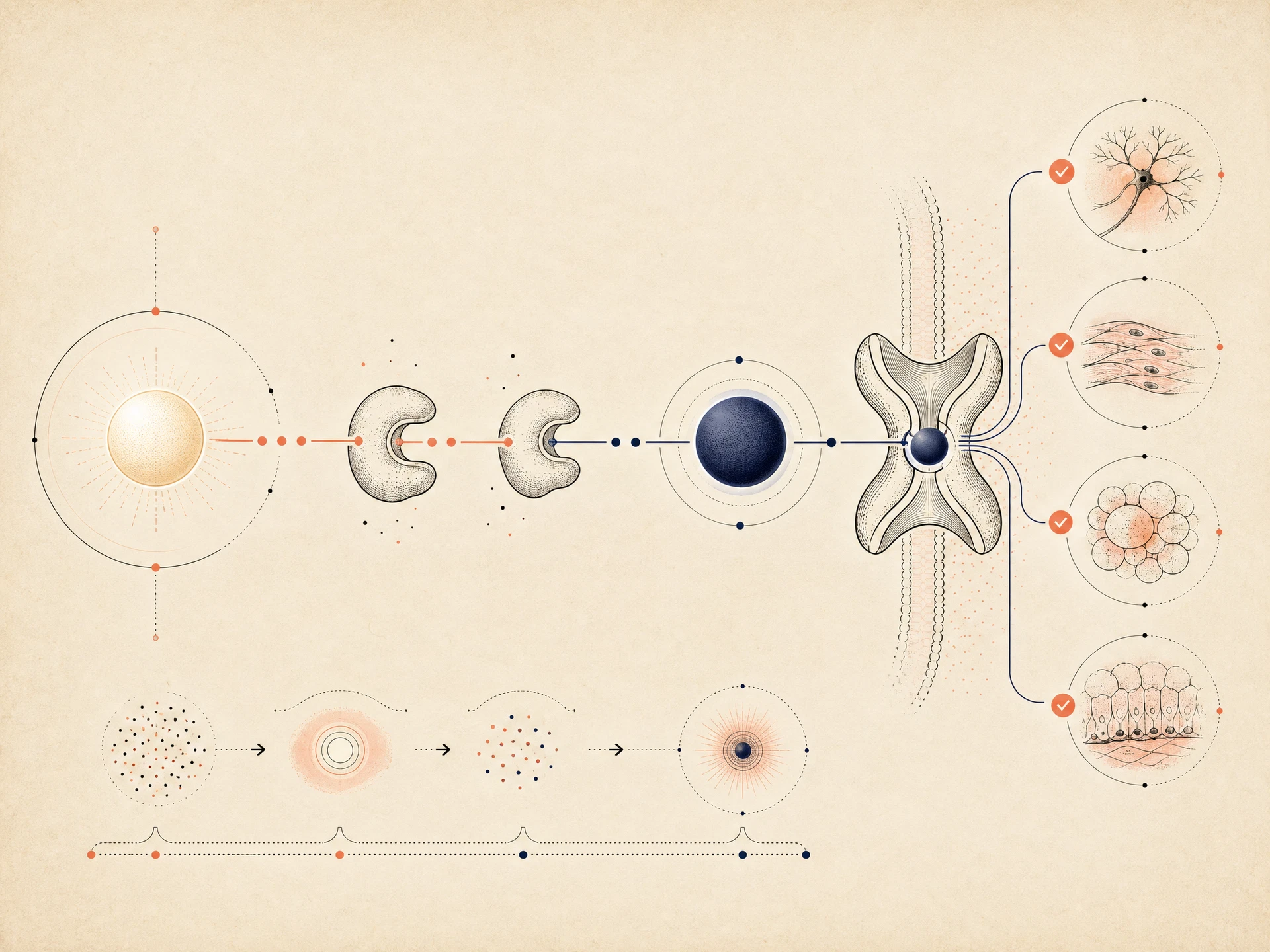
Dihydrotestosterone, or DHT, is a potent androgen derived directly from testosterone. The conversion process is driven by an enzyme called 5-alpha reductase. According to NCBI documentation, this enzyme is highly active in specific tissues, which means that while testosterone circulates broadly, DHT exerts powerful localized effects precisely where it is produced, making it a critical, albeit complex, part of male physiology.
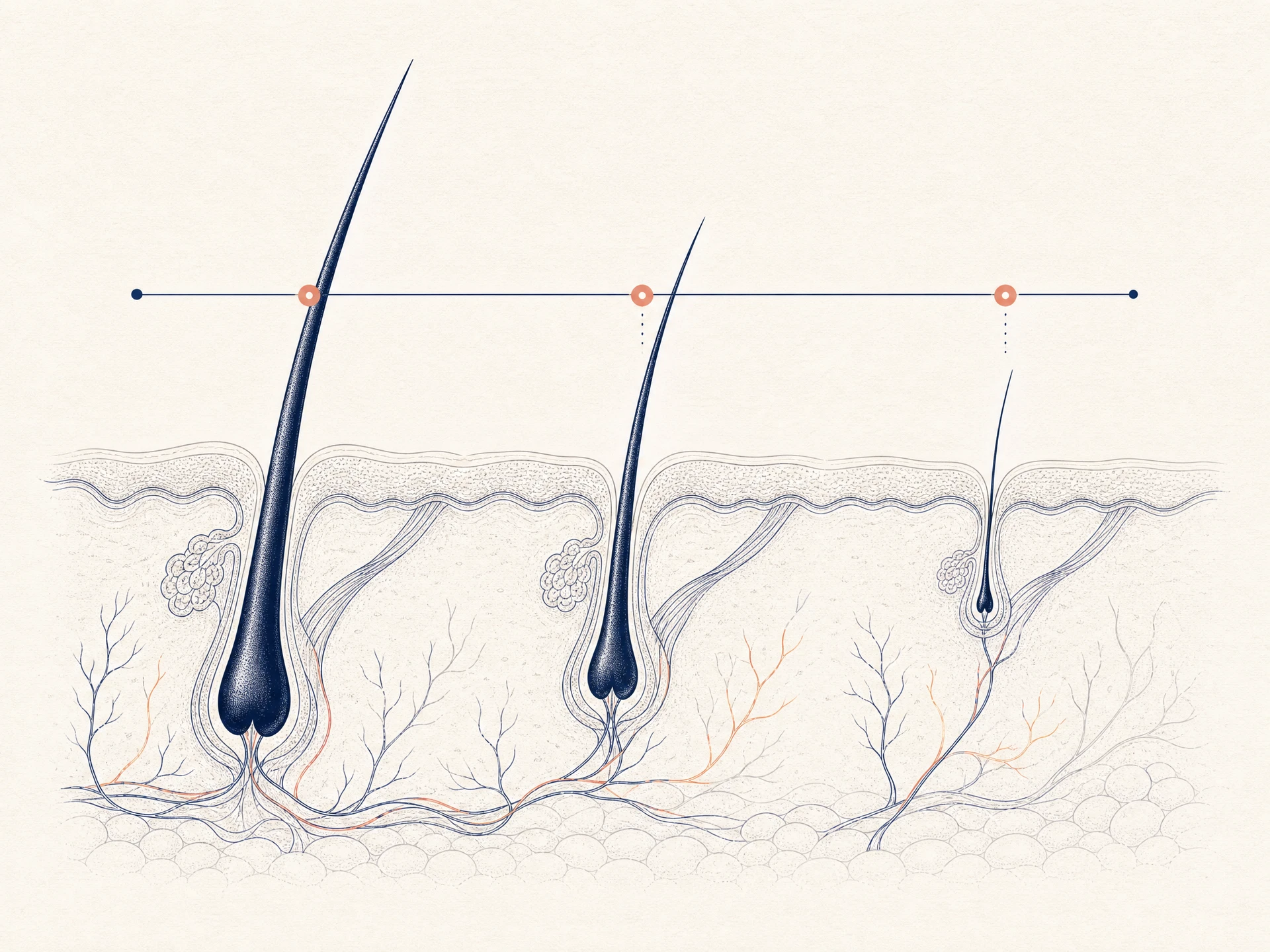
The effects of DHT are intensely tissue-specific. In the scalp, for individuals with a genetic predisposition, DHT can bind to androgen receptors in hair follicles, leading to miniaturization and characteristic male-pattern baldness. Conversely, in the prostate gland, DHT is the primary driver of growth and development, playing a central role in both healthy function and age-related enlargement (BPH).
While often blamed solely for hair loss, DHT is fundamentally essential for male development, particularly during gestation and puberty, where it drives the maturation of external genitalia. Even in adulthood, DHT contributes to facial and body hair growth, skin health, and overall neurological function. It is a more potent androgen than testosterone, binding more tightly to androgen receptors and staying bound longer.
Because DHT plays roles in both desired and undesired physiological processes, intentionally blocking it involves inevitable tradeoffs. Medications that inhibit 5-alpha reductase can successfully slow hair loss or shrink an enlarged prostate, but they alter the overall androgen balance. This systemic reduction in DHT can occasionally lead to side effects affecting sexual function, mood, and energy, underscoring the importance of medical supervision.
What this means in context
Health information becomes more useful when the question, the evidence, and the limit of the evidence stay together. This Signal Library note is designed to show the shape of the evidence without turning it into a self-diagnosis or a generic action plan.
Testosterone and its metabolite dihydrotestosterone (DHT) are both androgens. Their effects — on hair follicles, prostate, skin, and other tissues — depend on receptor activity and tissue-specific biology, not a simplistic good-versus-bad label. The right next question can depend on symptoms, history, medications, personal goals, and clinical context.
A circulating hormone measurement cannot by itself predict hair loss, fertility, or other tissue-specific outcomes. DHT-blocking interventions carry their own tradeoffs.
Frequently asked questions
Is DHT bad for you?
No, DHT is a natural and essential male hormone. However, in men with a genetic sensitivity, its localized activity can contribute to issues like hair loss or prostate enlargement.
Does DHT cause hair loss?
Yes, in those genetically prone to androgenetic alopecia, DHT binding to scalp follicles causes them to shrink over time, eventually stopping visible hair growth.
What is 5-alpha reductase?
It is the specific enzyme responsible for converting circulating testosterone into the more potent androgen, dihydrotestosterone (DHT).
How Corhack fits
Corhack is a men's health tracking app that helps you record the day-to-day context around sleep, meals, training, tasks, and personal goals. It does not diagnose, prescribe, interpret laboratory tests, or predict an individual health outcome.