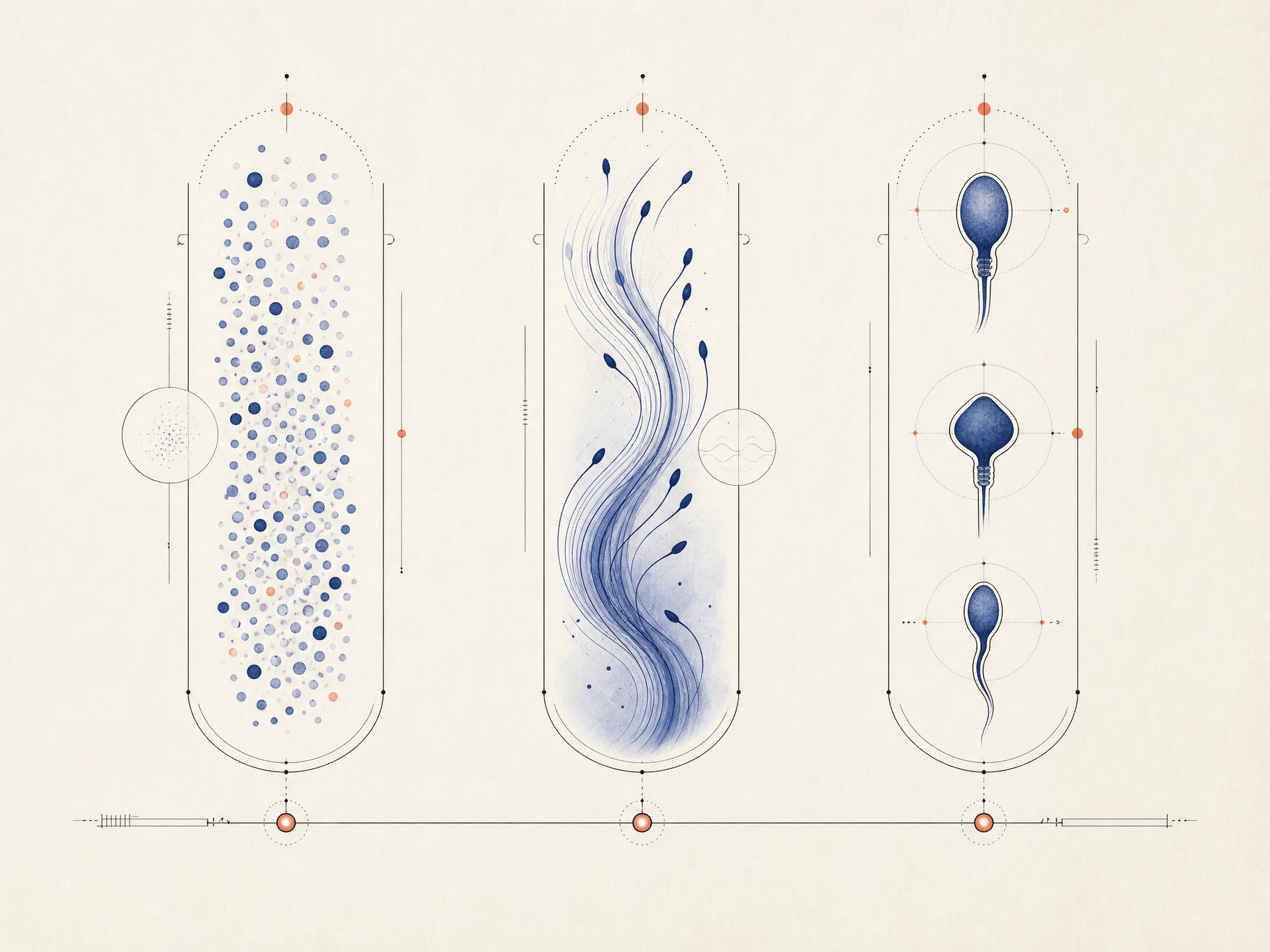
A semen analysis assesses concentration, movement (motility), and shape (morphology). A slightly abnormal result does not necessarily mean a man is infertile — context and repeat testing matter.
Key facts
- Semen analysis measures volume, count, movement, and shape based on WHO standards.
- Falling slightly below reference values does not guarantee a man is infertile.
- Sperm quality naturally fluctuates significantly due to stress, diet, and lifestyle.
- Diagnoses require at least two separate analyses spaced several weeks apart.
A semen analysis is the cornerstone of male fertility evaluation, providing a macroscopic and microscopic snapshot of reproductive health. The World Health Organization (WHO) establishes the clinical reference values used globally. The primary parameters analyzed include total volume, sperm concentration (count per milliliter), motility (the percentage of moving sperm), and morphology (the size and shape of the sperm cells).
While the numbers are precise, their interpretation requires clinical nuance. For example, a high concentration might compensate for slightly lower motility. The WHO reference limits represent the lower 5th percentile of fertile men, meaning that 5% of men who successfully fathered a child naturally had results below these thresholds. Therefore, a result slightly below the reference value is a risk factor, not an absolute barrier to conception.
One of the most important aspects of semen analysis is understanding biological variability. According to the CDC and fertility experts, semen parameters in a healthy male can fluctuate drastically from week to week due to illness, stress, heat exposure, or even the duration of abstinence before the test. A single poor result is never definitive evidence of permanent infertility.
Because of this inherent fluctuation, a clinical diagnosis is rarely made on a solitary test. If abnormalities are detected, guidelines standardly recommend a repeat analysis performed at least one to two months later, aligning with the roughly 70-day cycle required to produce new sperm. Only a persistent pattern of abnormal results guides long-term treatment decisions.
What this means in context
Health information becomes more useful when the question, the evidence, and the limit of the evidence stay together. This Signal Library note is designed to show the shape of the evidence without turning it into a self-diagnosis or a generic action plan.
A semen analysis assesses concentration, movement (motility), and shape (morphology). A slightly abnormal result does not necessarily mean a man is infertile — context and repeat testing matter. The right next question can depend on symptoms, history, medications, personal goals, and clinical context.
A clinician interprets semen analysis alongside history, examination, and the wider fertility context. One result is a data point, not a verdict.
Frequently asked questions
What is a normal sperm count?
According to WHO standards, a normal sperm concentration is at least 15 million sperm per milliliter, with a total count of at least 39 million per ejaculate.
What does sperm motility mean?
Motility refers to the ability of the sperm to swim effectively. Healthy fertility typically requires at least 40% of sperm to be moving naturally.
How often should semen analysis be repeated?
If an initial result is abnormal, a second test is usually ordered 4 to 8 weeks later to account for natural biological variation and the sperm production cycle.
How Corhack fits
Corhack is a men's health tracking app that helps you record the day-to-day context around sleep, meals, training, tasks, and personal goals. It does not diagnose, prescribe, interpret laboratory tests, or predict an individual health outcome.